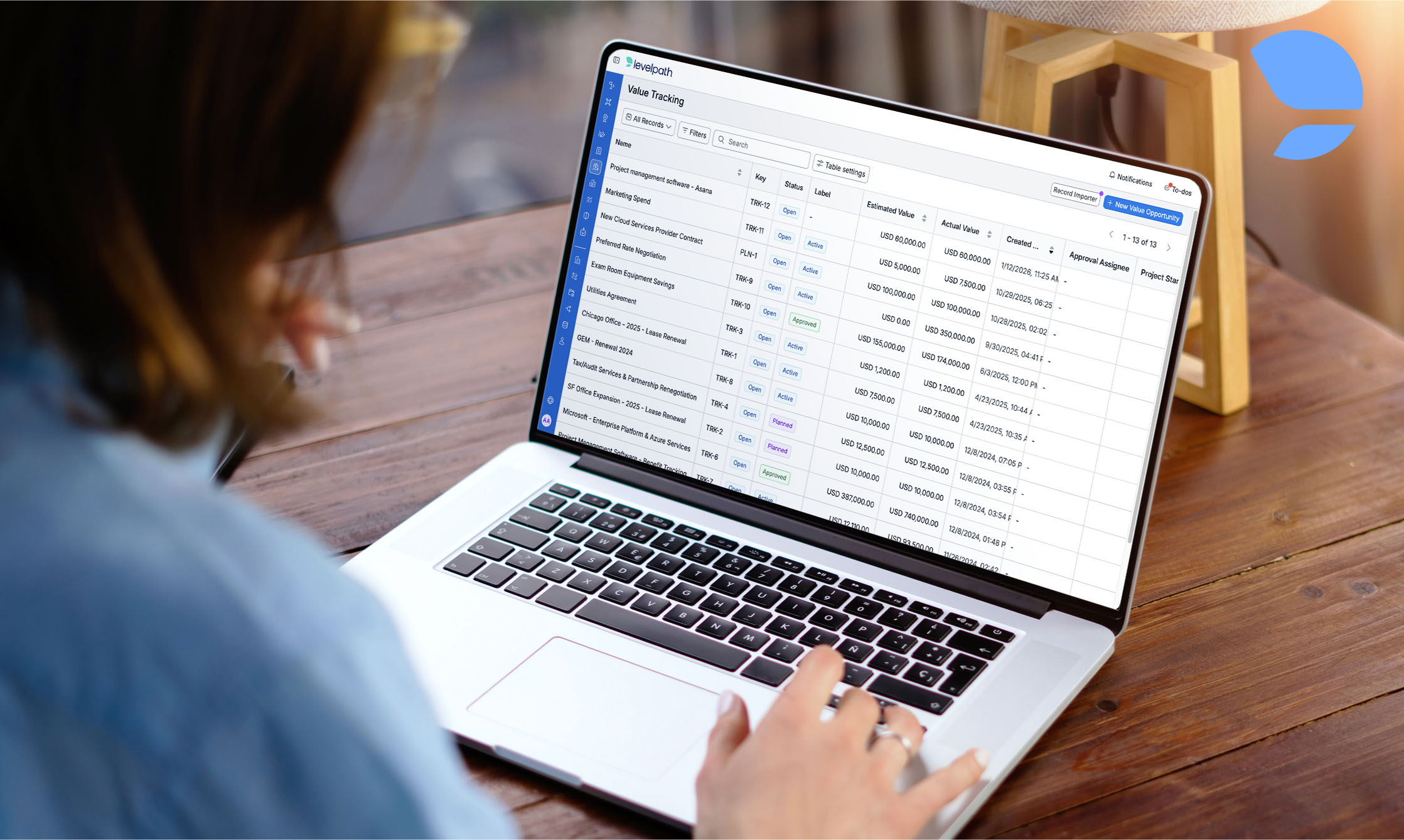



What you need to know: Procurement in 2026 will look fundamentally different from what it has before. AI-native platforms, AI Agents, and unified data models will redefine how work gets done, how value is measured, and how procurement leaders influence strategy. The gap between organizations built for AI and those relying on legacy systems will widen, while procurement gains credibility as a strategic, intelligence-driven function. These predictions outline what enterprises should expect next:
- AI-native procurement will clearly separate leaders from the rest.
- AI elevates human roles instead of replacing them.
- AI Agents become a standard operating model in procurement.
- Unified data aligns procurement and finance around ROI.
- CPOs move into the strategic core of the business.
2026 Marks a New Era for AI Procurement
For years, procurement has been under pressure to move faster, manage growing third-party risk, and deliver measurable business value, all while working with fragmented systems designed for a different era. The introduction of AI promised sweeping change, but early adoption often resulted in surface-level automation rather than meaningful transformation.By 2026, that experimentation phase will be over. Enterprises expect AI procurement to deliver real operational efficiency, strong governance, and clear ROI. Procurement is no longer evaluated solely on process execution. It is measured on insight, speed, strategic contribution, and business impact. The organizations that succeed will be those that adopt AI foundations capable of supporting this new reality.
1. AI-Native Procurement Will Clearly Separate Leaders from the Rest
In 2026, organizations using truly AI-native procurement platforms will outperform those relying on legacy systems with AI layered on top. This will create a clear ‘tale of two cities’ across procurement teams. AI-trained and AI-enabled teams deliver dramatically higher value to the business than teams constrained by legacy methods, just as we are seeing across other forms of work.Many procurement platforms claim AI capabilities, but most still depend on fragmented data and disconnected workflows. Over the next year, that distinction will become unmistakable. AI-native procurement platforms are built on unified data models that allow intelligence to operate across sourcing, contracts, suppliers, and risk without constant manual reconciliation.This matters because AI procurement only delivers value when it can act on consistent, structured information. When data lives in silos, governance becomes harder to enforce, and outputs require lots of manual validation. AI-native systems eliminate that friction, giving procurement teams confidence in both their insights and execution.AI-native procurement in 2026 will have:
- AI embedded directly into procurement workflows rather than added as just an orchestration layer
- Unified data that spans intake, sourcing, contracts, suppliers, and risk
- Outputs that are explainable, auditable, and trusted by procurement and finance teams
This shift is positive for procurement because it replaces manual, defensive work with proactive decision-making and faster execution.
2. AI Elevates Human Roles Instead of Replacing Them
In 2026, AI procurement will increase efficiency by removing low-value work, rather than by eliminating roles.As AI-native platforms and AI Agents take on manual tasks, procurement professionals gain time to focus on higher-impact work. Manual data gathering, follow-ups, and status checks largely disappear, replaced by Agent execution.AI will enable procurement teams to deliver greater value with the same headcount as they scale. Procurement professionals spend more time influencing strategy, managing supplier relationships, and handling complex decisions that require human judgment.Procurement workflow changes with AI in 2026:
- Manual and repetitive tasks are automated through AI Agents
- Humans focus on strategy, relationships, and exception handling
- The enterprise will achieve higher efficiency without sacrificing governance
This AI shift makes procurement roles more strategic, visible, and influential across the enterprise.
3. AI Agents Become a Standard Operating Model in Procurement
In 2026, AI procurement teams will rely on human-in-the-loop AI Agents to execute routine work faster while keeping critical, strategic work under human control.AI Agents represent one of the most significant advances in AI procurement, but their value depends on how they are deployed. In leading organizations, AI Agents do not operate independently. They function within defined guardrails, trained on company policies, supplier history, and risk thresholds, with procurement professionals reviewing and guiding outcomes.This human-in-the-loop approach balances efficiency with strong governance. AI Agents handle repetitive execution-based tasks, while humans retain judgment, accountability, and strategic control. Procurement teams scale execution without increasing headcount or compromising trust.AI Agents will be used in procurement in 2026 to:
- Execute sourcing steps, supplier evaluations, and contract preparation
- Provide information for procurement professionals to review, refine, and approve
- Follow clear rules, oversight, and auditability for governance purposes
This model allows procurement to move faster while keeping governance standards strong.
4. Unified Data Aligns Procurement and Finance Around ROI
In 2026, unified data will close the gap between procurement activity and financial outcomes.Historically, procurement and finance have relied on different systems, metrics, and timelines, leading to conflicting views of value. AI-native procurement platforms change that by creating a shared, real-time data foundation that connects spend, contracts, suppliers, and risk.With unified data, AI procurement delivers insights that both functions can trust. Procurement demonstrates value in financial terms, while finance gains visibility into the operational drivers behind the numbers. This alignment accelerates decisions and strengthens executive confidence.Because AI removes so much manual work from procurement, ROI calculations in 2026 will increasingly reflect impact per head. Teams are able to deliver significantly more value with the same team, making procurement performance easier to quantify and defend at the executive level.Procurement and finance alignment in 2026 will have:
- Shared metrics for savings, efficiency, and risk reduction
- Real-time visibility instead of retrospective reporting
- A single, trusted view of procurement impact
This alignment reinforces procurement’s role as a driver of business performance and connects them with finance on the things that matter for ROI.
5. CPOs Move Into the Strategic Core of the Business
By 2026, CPOs will be recognized as strategic leaders throughout the business because AI gives operational visibility and influence across many workflows and departments.As AI Agents handle execution and unified data improves transparency, procurement leadership can shift fully into strategy. CPOs gain a comprehensive view of how work flows across the organization, how suppliers perform, and where risk concentrates.With third-party risk and regulatory pressure continuing to rise, this visibility becomes essential. Procurement emerges as the connective layer between finance, IT, legal, and security, supported by AI-native systems that maintain governance while improving efficiency.Procurement leadership becomes strategic through:
- Owning supplier, contract, and risk intelligence
- Shaping enterprise decisions earlier rather than enforcing controls later
- Coordinating cross-functional priorities across finance, IT, legal, and security
This evolution places procurement leadership at the center of enterprise strategy.
Why AI-Native Procurement Will Make 2026 a Breakthrough Year
The changes coming in 2026 represent a long-overdue breakthrough for procurement. AI-native platforms, human-in-the-loop AI Agents, unified data, and stronger governance give procurement teams the tools they need to operate with speed, clarity, and confidence.Levelpath was built for this moment. As an AI-native procurement platform, Levelpath embeds intelligence directly into workflows rather than layering it onto legacy systems. This foundation enables responsible use of AI Agents, keeps humans in control, and ensures governance at scale. Unified data across sourcing, contracts, suppliers, and risk allows procurement teams to prove value continuously and support better decisions across the enterprise.In 2026, procurement will no longer be defined by process management. It is defined by insight, execution, and influence. AI-native platforms like Levelpath make that future possible, helping procurement leaders meet rising expectations and lead with confidence in a more complex business environment.To learn more and set yourself up for transformation in 2026, request a demo of Levelpath’s AI procurement solution today. – Alex & Stan